Water Well Railway Corridor Completed

Awash–Weldiya 28 Water Wells Railway Corridor

Twenty-eight boreholes drilled along the Awash–Weldiya railway construction corridor — Orchid's largest single water well programme, supplying workforce camps, batching plants and local communities across 500 km.

0 Boreholes Drilled
0 Max Depth
0 Prakla Rigs
500 km Corridor
Project Overview

Water for the railway that connected Ethiopia's north

The Awash–Weldiya railway construction programme employed tens of thousands of workers spread across 500 km of corridor. Every worker camp, every concrete batching plant and every dust suppression operation required reliable water supply — none of the existing rural infrastructure could support a national construction programme.

Yapi Merkezi engaged Orchid to drill 28 water supply boreholes distributed along the railway corridor — the largest single water well programme Orchid had executed. Three Prakla rigs operated simultaneously at different locations, with a central drilling management team co-ordinating hydrogeological survey, borehole placement and well development across the full 500 km.

Many boreholes were positioned for dual purpose — serving the construction programme during the build period and then transferring to local community water supply after completion, providing a lasting water infrastructure legacy in some of Ethiopia's most water-stressed communities.

"Twenty-eight boreholes across 500 km of railway corridor required three rigs, a hydrogeological strategy and the logistics of a small construction company operating simultaneously at a dozen different sites."
— OBG Water Well Division
Scope of Work

Three rigs. Twenty-eight boreholes. One corridor.

Orchid's largest single water well programme executed across two contrasting hydrogeological environments — from the Afar lowland plains to the Amhara highland valleys.

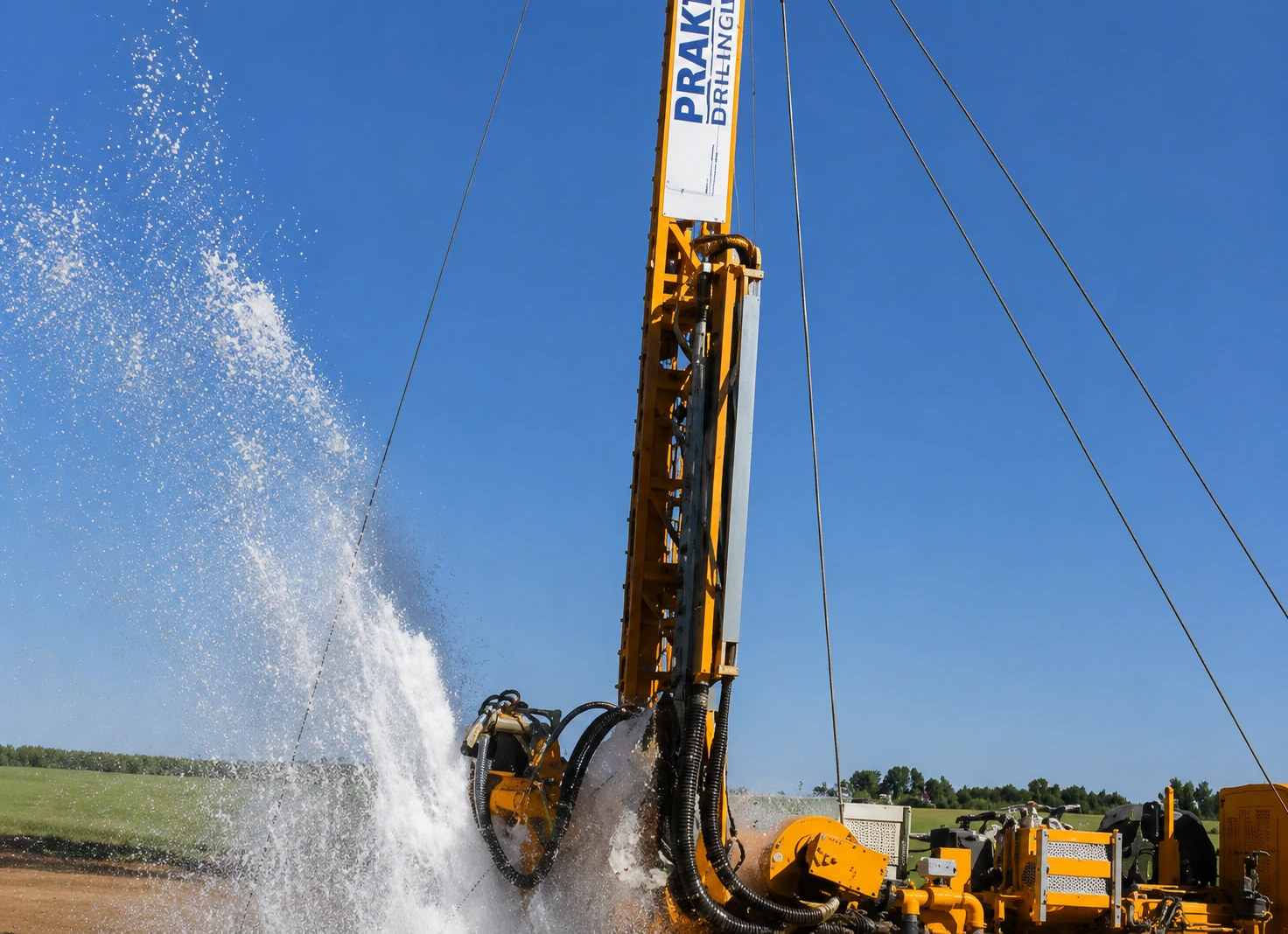
Prakla rig — 28-well drilling programme, Awash–Weldiya corridor
01

28-Well Drilling Programme

Three Prakla rotary rigs deployed simultaneously at different corridor locations — drilling 28 boreholes from the Afar lowland plains to the Amhara highland valleys, adapting drilling method to dramatically different hydrogeological conditions between the two regions.

  • 28 boreholes · 3 Prakla rigs simultaneous
  • 50–700 m depth range
  • Air rotary & mud rotary methods
Hydrogeological survey — Awash–Weldiya corridor
02

Hydrogeological Strategy

A corridor-wide hydrogeological survey — desk study, geophysical sounding and site inspection — identified optimal borehole locations to maximise yield success rate in both Afar alluvial aquifers and Amhara highland fractured rock aquifers.

  • Corridor-wide survey · VES geophysical sounding
  • >90% well success rate
  • Aquifer type matched to method
Community legacy — dual purpose boreholes, Afar & Amhara
03

Community Legacy — Dual Purpose

Many boreholes were sited to serve both the railway construction programme and local communities — providing lasting water infrastructure in water-stressed rural areas of Afar and Amhara after project completion.

  • Dual-purpose siting strategy
  • Hand pump installation
  • WASH compliance · Asset transfer to community
The Scale

Numbers that define the programme

28
Wells
Boreholes drilled
Largest OBG water well programme
500
km
Corridor length
Afar lowlands to Amhara highlands
3
Rigs
Prakla rigs deployed simultaneously
Air rotary & mud rotary
700
m
Maximum depth achieved
Amhara highland fractured rock
The Challenge

28 wells across two contrasting hydrogeological environments

Dual Hydrogeology

Afar alluvial aquifers and Amhara highland fractured rock aquifers require fundamentally different drilling methods, casing designs and development techniques — forcing Orchid to maintain dual capability in the same programme.

Programme Coordination

Three rigs at multiple locations across 500 km demands coordination closer to a construction company than a drilling outfit — survey, permitting, drilling, development and community consultation all proceeding simultaneously.

Seasonal Flooding

The Afar section is subject to seasonal flash flooding that terminates drilling operations, requiring careful dry-season scheduling to complete required boreholes before the rains arrive.

Our Approach

Corridor-wide planning, dual capability and seasonal discipline

Corridor Hydrogeological Plan

Before the first rig moved, Orchid's hydrogeologist produced a corridor-wide borehole siting plan — classifying each location and assigning the appropriate rig and method. Dry hole risk reduced to under 10%.

Prakla RB Fleet

Three Prakla rigs covering both air rotary and mud rotary — rig-to-location assigned by hydrogeological classification, ensuring the right machine at each site.

Dry Season Sequencing

Afar section boreholes scheduled for October–April only. Amhara highland boreholes drilled year-round on better-drained terrain — balancing the programme to maintain rig productivity across seasons.

Resources Deployed

The machines that drilled 28 boreholes

Three Prakla rigs from Orchid's own fleet — no sub-hire, no third-party dependency across 500 km of corridor.

3 × Prakla RB-series rigs

Prakla rotary rigs operating air rotary and mud rotary methods across both Afar and Amhara hydrogeological zones

Air rotary & mud rotary systems

Dual drilling method capability — air rotary for fractured rock, mud rotary for alluvial formations in Afar

VES geophysical equipment

Vertical electrical sounding (VES) array for pre-drill aquifer mapping across the full 500 km corridor

Airlift development pumps

Airlift pumping for well development — removing drill cuttings and developing the aquifer gravel pack

Pump test equipment

Step-drawdown and constant rate test equipment with data loggers — proving sustainable yield at each borehole

Submersible pump sets

Grundfos and equivalent submersible pump sets for both motorised production wells and test pumping

Hand pump installation tools

Afridev and equivalent hand pump installation tooling for community supply wells — enabling quick WASH-compliant completion

GPS survey equipment

GPS-referenced borehole siting and completion records — all 28 boreholes georeferenced for the programme as-built register

Three Prakla rigs operating simultaneously across the Awash–Weldiya corridor
Project Timeline

Three years from survey to community handover

2013

Hydrogeological Survey & Mobilisation

Corridor-wide hydrogeological survey — desk study, VES geophysical sounding and borehole siting plan produced. Three Prakla rigs mobilised from Addis Ababa to forward bases.

2014

First 10 Boreholes — Afar Section

Dry season drilling of the first 10 boreholes in the Afar alluvial section — mud rotary method in alluvial formations. All 10 boreholes developed and pump tested before seasonal rains.

2015

Middle Corridor Boreholes & Community Consultation

Middle corridor drilling programme — transitional geology between Afar and Amhara zones. Community consultation and dual-purpose siting strategy confirmed for community legacy wells.

2016

Final Amhara Section, Development & Community Handover

Final boreholes in Amhara highland fractured rock — air rotary method. Well development, pump testing and hand pump installation complete. Community water asset handover formally completed.

Prakla rig — corridor drilling
Water for Development

Clean water for 28 communities along Ethiopia's railway spine

The Awash–Weldiya 28-well programme left behind 28 functioning boreholes in water-stressed communities across Afar and Amhara — a permanent infrastructure legacy from Ethiopia's national railway construction programme.

Well development — pump testing
Completed wellhead installation
28 Boreholes

drilled across 500 km of railway corridor — serving construction first, and then communities, for generations.

Completed wells — community handover
Client & Partners

Working alongside Ethiopia's railway builders

Ethiopian Railways Corporation (ERC)

State-owned railway authority and project owner, responsible for the Awash–Weldiya standard gauge railway — part of Ethiopia's national rail network expansion programme.

Project Owner

Yapi Merkezi İnşaat A.Ş.

Turkish engineering and construction company — main contractor for the Awash–Weldiya railway, responsible for all civil construction works including the water supply sub-contract to Orchid.

Main Contractor — OBG's Principal

Orchid Business Group PLC

Ethiopia's specialist water well drilling contractor, executing the 28-borehole programme across the 500 km Awash–Weldiya corridor with three Prakla rigs operating simultaneously.

Drilling Sub-Contractor
Have a project in mind?

Let's build something
remarkable together.

From feasibility through final handover — Orchid Business Group brings the machines, the manpower and the mastery.

Chat with us!